A psychological framework for creating virtual music artists that attract real audiences. Every listener belongs to a cluster with predictable drives, fears, and loyalty mechanics. This is the map.
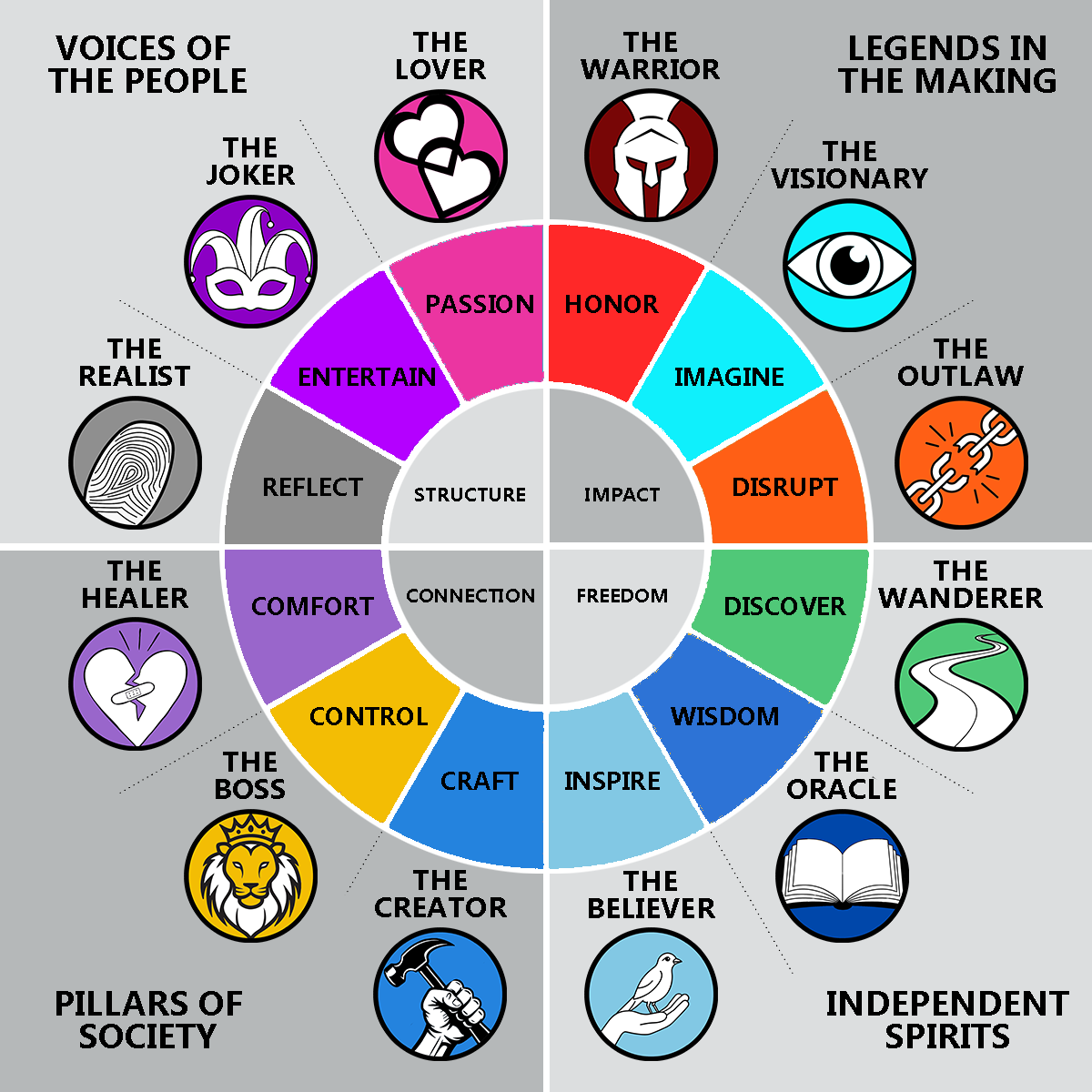
// The Atlas Archetype Wheel · Four Quadrants · Twelve Archetypes
The music industry has always built artist identities — it just never made the framework explicit. The Atlas Archetypes do. Each of the 12 archetypes maps to a distinct psychological need in the listening public: a core drive that pulls them toward certain artists, and a core fear that makes them loyal once they find one.
For virtual artists built on AI, this is not background theory — it is the first decision. You do not build the artist and then find the audience. You select the archetype, architect the identity to match it, and the audience self-selects. The framework is the foundation.
Get the 97-Page Manual Free →They speak what the audience feels but cannot say.
The Lover builds audiences through radical vulnerability. Every lyric is an act of exposure. They attract listeners who feel unseen — and finally see themselves in the confession. The bond is not admiration. It is recognition.
Their audience arrives broken and leaves feeling understood. The Lover's power is emotional contagion at scale.
The Joker is the court jester who survives every regime by being too valuable to silence. They disrupt power structures through comedy and deflect cultural pressure through absurdity. Behind every punchline is a precise social critique.
The Joker gives their audience permission to laugh at what frightens them. The humor is the vehicle. The message is the contraband.
The Realist documents what others refuse to say. Their audience doesn't come for escapism — they come for recognition. Every uncomfortable truth is a contract with the listener: I will not waste your time.
The Realist's value grows in direct proportion to cultural dishonesty around them. More noise in the room; more valuable the signal.
They don't follow culture. They collide with it.
The Warrior earns everything publicly. Their discography is a record of battles won. They attract audiences who believe in discipline — listeners who are also proving something to someone.
The Warrior's audience doesn't merely consume their music. They adopt it as a personal standard. Every release raises the bar — for the artist and for everyone watching.
The Visionary speaks to an audience that doesn't fully exist yet. They operate in decades, not album cycles. Their catalog compounds in value rather than depreciates — the world catches up to them, not the other way around.
Their audience discovers them the way someone discovers a philosopher — with the sense that it was always inevitable.
The Outlaw's power comes from refusal — refusing genre, refusing label systems, refusing the rules written before they arrived. Their audience identifies with the rebellion, not just the music.
Their greatest danger: becoming the institution they opposed. The rebellion must evolve before the audience notices the comfort setting in.
Complete behavioral profiles, loyalty mechanics, all 4 quadrants, and the Archetype Wheel reference. Free when you subscribe — stay updated on every new tool and step in the blueprint as it unfolds.
Updates when they drop · No noise · Unsubscribe anytime
They build things that last. Their audiences build alongside them.
The Healer's music is medicine. They understand that some listeners arrive broken, and their career is built around the function of restoration. The audience relationship is closer to therapist than performer.
They operate in the recovery economy — a quieter, more loyal market with significantly lower churn. Their listeners return at their lowest points, which means reliably.
The Boss builds empires. Their audience doesn't just listen — they orbit. The Boss understands status and uses music as a demonstration of it. Respect is the only currency.
Every release is an announcement. A declaration that the listener has standards and is not apologizing for them.
The Creator measures success in craft, not charting. Their audience is smaller, more devoted, and more likely to be musicians themselves. Influence spreads sideways — through the artists they inspire rather than streams.
Their catalog rarely spikes. It compounds. Posthumous discovery is not an accident — it is the architecture of the work itself.
They answer to no system. Their audiences follow them out of it.
The Wanderer's identity is movement. They shed personas and genres as a survival mechanism, staying ahead of the audience's ability to contain them. The loyal Wanderer fan has accepted they signed up for a journey, not a destination.
Their audience is the most sophisticated in the market — and the hardest to acquire.
The Oracle does not speak often. When they do, it lands as inevitability. They earn credibility through silence — every word held until it has weight. The Oracle's audience is not a fanbase. It is a congregation.
The less they say, the more each word is worth — a dynamic most artists cannot access because they cannot stop talking.
The Believer carries audiences through their lowest points. Their music is elevation — the soundtrack to someone's comeback, their recovery, their recommitment to something larger than themselves.
Credibility is sustained only as long as they appear to believe it themselves. An audience detects a Believer who has lost faith before the Believer can.
Every archetype. Every quadrant. The full behavioral profiles, loyalty mechanics, core fears, and the identity construction framework. The strategic manual for building virtual artists that attract — and keep — real audiences.